
Adani Group on Friday raised Rs 4,850 crore from the sale of 13.5 per cent of its stake in Fortune oil maker Adani Wilmar as part of a strategy to exit non-core activities to focus on main infrastructure business. The conglomerate, which last month announced its exit from Adani Wilmar by selling the bulk of its stake to a joint venture partner, had on Thursday announced sale of 17.54 crore shares (13.50 per cent equity) in the company on January 10 (to non-retail investors) and on January 13 (to retail investors) at a floor or minimum price of Rs 275 apiece.

With just four trading sessions to go for the ITC-ITC Hotels demerger record date shares of ITC continue to consolidate in a thin range of Rs 460 - Rs 480 in an otherwise volatile equity market. On Tuesday thus far despite a near 1 per cent fall in the Sensex and Nifty; ITC traded on a flat note. ITC had set the demerger ratio at 1:10 - meaning 1 share of ITC Hotels for every 10 shares of ITC as of the record date January 6, 2025.

The Securities and Exchange Board of India (Sebi) has proposed stricter eligibility criteria for adding and retaining stocks in the futures and options (F&O) segment, which accounts for the bulk of the trading volumes. The proposal-which comes six years after the securities regulator last revised the stock selection framework---is much awaited by the market players as the derivatives stock list has largely remained stagnant for the last two years.

IPOs worth Rs 50,000 crore including Hyundai, NTPC Green Energy and Swiggy are set to hit the market in late October or early November.

Benchmark Sensex trimmed early gains to close marginally higher while Nifty settled flat in choppy trade on Tuesday as gains in auto shares were offset by selling pressure in banking and energy shares. The 30-share BSE barometer closed marginally up by 37.08 points or 0.06 per cent to 60,978.75 with 15 of its stocks ending in green and the rest in red. The index opened higher and gained over 300 points to a high of 61,266.06 in early trade.

The biggest bounce is in the realty sector, where the industry index jumped 80%. There's been a turnaround also in automobiles and ancillaries (up 45%). The pharma and health care indices have a welcome return of roughly 35%.

Among index funds, the most popular products are funds tracking the Nifty 50 and Sensex, says Dwaipayan Bose, and explains the finer points of selecting the right index mutual fund.

Domestic investors are tightening their grip on the ownership of listed companies. The gap between the shareholding of domestic institutional investors (DIIs) and foreign portfolio investors (FPIs) narrowed to 13.11 percentage points at the end of the September 2023 quarter. At the peak, the gap was nearly 50 percentage points in March 2015, according to an analysis by Prime Database, a leading provider of data on the capital market.

Over half, or 269 NSE 500 stocks, have given over 10-fold (10x) returns in the last two decades, finds a recent report by Goldman Sachs that analysed 10 major markets across emerging and developed markets (EM/DM) that covered 6,700 stocks. The report examined '10-baggers' - stocks that have generated at least 10x total returns within a rolling 5-year period over the past two decades. Some of the prominent ones that comprise these 269 stocks in the Indian context stocks that delivered over 10x total returns over a 5-year rolling period since 2000 as per Goldman Sachs includes Westlife Foodworld, Bharti Airtel, Adani Total Gas, Patanjali Foods, Larsen & Toubro, BEML, Blue Star, Shree Cement, Lupin, Godrej Industries, Astral, Adani Enterprises, Hindustan Petroleum and Deepak Fertilisers.

Market breadth depicted strength. There were almost 3 gainers against every loser on BSE

rediffGURU Dev Ashish answers your personal finance and mutual fund queries.

Business cycle funds aim to optimise returns by aligning their portfolios with different phases of the economic cycle. First-time investors, those who prefer stable sector allocations, and those averse to volatility should steer clear of them.

On the Sensex chart, UltraTech Cement, HCL Tech, HDFC, Tech Mahindra, HDFC Bank and HUL emerged as the major laggards -- falling as much as 4.7 per cent. NSE Nifty dropped 63.05 points to end at 14,296.40.
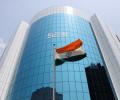
The market regulator's newly proposed selection criteria for the over Rs 400-trillion-a-day futures and options (F&O) market could pave the way for the entry of popular stocks such as Life Insurance Corporation (LIC) of India, Jio Financial Services, Zomato, Paytm, DMart, and Adani Energy into the derivatives segment. The Indian derivatives market, which accounts for most of the trading volumes, could see big churn with over two dozen exits from the current list of 182 stocks due to an upward revision in the eligibility thresholds.

Technology stocks rallied, with the IT index up 2.45 per cent as TCS, Infosys, Wipro and HCL Technologies spurted following favourable rupee movement.

Infosys was the top gainer in the Sensex pack, rising over 2 per cent, followed by Bajaj Finance, HCL Tech, Tata Steel, Tech Mahindra and NTPC. On the other hand, Maruti, Sun Pharma, HUL and ITC were among the laggards. Nifty rose 122.15 points to 17,343.55.

From the 30-share pack, Sun Pharma, TCS, Tech Mahindra, NTPC, Wipro, UltraTech Cement, Dr Reddy's Laboratories and Infosys were the major gainers, jumping up to 3.99 per cent. In contrast, Tata Steel, Nestle, Titan Company, PowerGrid, Reliance Industries Limited and State Bank of India were among the laggards.

IndusInd Bank was the top loser in the Sensex pack, plummeting over 23 per cent. PowerGrid, Kotak Bank, Bajaj Finance, HDFC Bank and NTPC also finished significantly lower. ONGC and ITC were the only stocks in the index that ended with gains. US President Donald Trump has proposed an economic package which could approach $1 trillion, a rescue initiative not seen since the great recession of 2008.

On April 10, the Nifty could have begun a new super cycle which could run to 2025, says Sonali Ranade

After a stellar 2023, the mutual fund industry sustained its growth momentum in 2024 with an impressive Rs 17 lakh crore surge in assets, driven by buoyant equity markets, robust economic growth, and increasing investor participation. Experts are predicting the positive trend will extend into 2025.

'We are expecting lower levels in the week beginning March 1.'

India's stock markets are experiencing a shift in investor sentiment, with a 30 per cent surge in Chinese stocks, prompting investors to move money from domestic markets to China. This reversal of fortunes is a notable change from the past three years, where China's losses benefited India.

'Higher interest rates make gold less attractive as it doesn't generate yield.' 'However, with rates set to fall, the tables are turning for gold.'

Metal stocks were trading under pressure while IT, auto, realty stocks gained in today's deals

In the Sensex kitty, ITC turned star performer by surging 2.45 per cent, followed by NTPC rising 2.19 per cent.

Investors' wealth jumped Rs 13.78 lakh crore on Monday as the benchmark equity index Sensex hit its lifetime high after exit polls predicted a massive win for the BJP-led NDA in the Lok Sabha polls. The 30-share BSE Sensex jumped 2,777.58 points or 3.75 per cent to hit a record peak of 76,738.89 in early trade. The benchmark finally ended at 76,468.78, registering a sharp rally of 2,507.47 points or 3.39 per cent.

rediffGURU Dev Ashish answers your personal finance and mutual fund queries.

'Focus on 19,400/64,900 as the key resistance levels for the Nifty/Sensex.'

Nestle, State Bank of India, Power Grid, Tata Steel, Larsen & Toubro and Mahindra & Mahindra were the other major gainers. In contrast, Tech Mahindra, Axis Bank and Reliance Industries were the laggards.

Net inflows into two of the 'lower risk' equity funds - largecaps and flexicaps - outpaced the flows into smallcap funds during January 2024 for the first time in 17 months. This is an indication that investors may now be shifting to the relatively safer largecap stocks after a sharp run up in the mid and smallcap spaces. Net inflows into large and flexicap funds were at Rs 3,730 crore last month against Rs 3,260 crore by smallcap schemes.

ICICI Bank was the top Sensex gainer after S&P Global Ratings affirmed its 'BBB-' long-term issue ratings on the senior unsecured bonds.
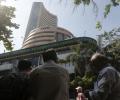
Reliance Industries was the top gainer in the Sensex pack, rising over 1 per cent, followed by M&M, HCL Tech, Axis Bank, ICICI Bank and HUL. On the other hand, Bharti Airtel, Maruti, SBI, PowerGrid, NTPC and Tata Steel were among the laggards.

Q3 results have been poor but better than extremely low expectations.
Among the Sensex firms, major winners included Tata Steel, rising 3.77 per cent, followed by HCL Tech, which gained 3.62 per cent. IndusInd Bank and PowerGrid closed with a gain of 3,60 and 3.34 per cent, respectively. Other gainers were Tech Mahindra, Hindustan Unilever, Bajaj Finserve and Bharti Airtel, among others. On the other hand, ICICI Bank, Axis Bank, Asian Paints, Bajaj Finance and TCS were the only laggards, sliding up to 2.94 per cent.
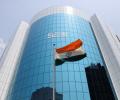
The Securities and Exchange Board of India's (Sebi's) six-step plan to curb retail participation in speculative index derivatives may lead to a substantial drop in volumes - potentially by 30-40 per cent. These measures aim to reduce excessive speculation in the futures and options (F&O) segment, where daily turnover often exceeds Rs 500 trillion and retail investors end up on the losing side of the trade more often. Sebi has decided to increase the contract size from Rs 5 lakh to Rs 15 lakh, raising margin requirements and mandating the upfront collection of option premiums from buyers.

The cash pile within smallcap mutual fund (MF) schemes has grown over the past few months amid a relentless rally in stocks in this space. While fund managers usually don't make cash calls, incessant inflows and valuation discomfort have forced their hand. At the end of January, the top 10 schemes had over Rs 12,160 crore in cash, compared to Rs 8,700 crore in August 2023.
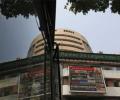
Lupin was the top gainer after the USFDA cleared its Goa facility

What worked for the markets was favourable global investor sentiment and encouraging flows into the emerging markets following stimulus measures taken by central banks.
The 30-share BSE Sensex surged by 477.24 points or 0.83 per cent to close at more than one-week high of 57,897.48. As many as 28 of its constituents closed with gains while two declined. The broad-based Nifty of the National Stock Exchange rose by 147.20 points or 0.86 per cent to settle 17,233.45, tracking gains in Sun Pharma, Asian Paints, and Reliance Industries.

Indian companies are generating more cash than ever. The net cash flow from listed firms' operations hit a new high of Rs 11.1 trillion in financial year 2023-24 (FY24), crossing the Rs 10-trillion mark for the first time, according to the Centre for Monitoring Indian Economy (CMIE) data going back to 1990-91. The FY24 figure represents a 19.3 per cent jump over the previous year, even as quite a few companies are yet to release their numbers.
